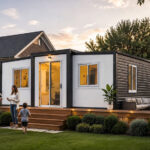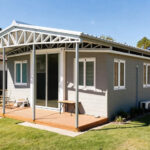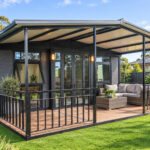
“Do I need a foundation for my container house?” This is one of the most common questions.
The short answer: It depends.
One of the great advantages of a container house is that it doesn‘t require the deep foundations of traditional buildings. However, for long-term stability and comfort, you’ll need a level, solid base.
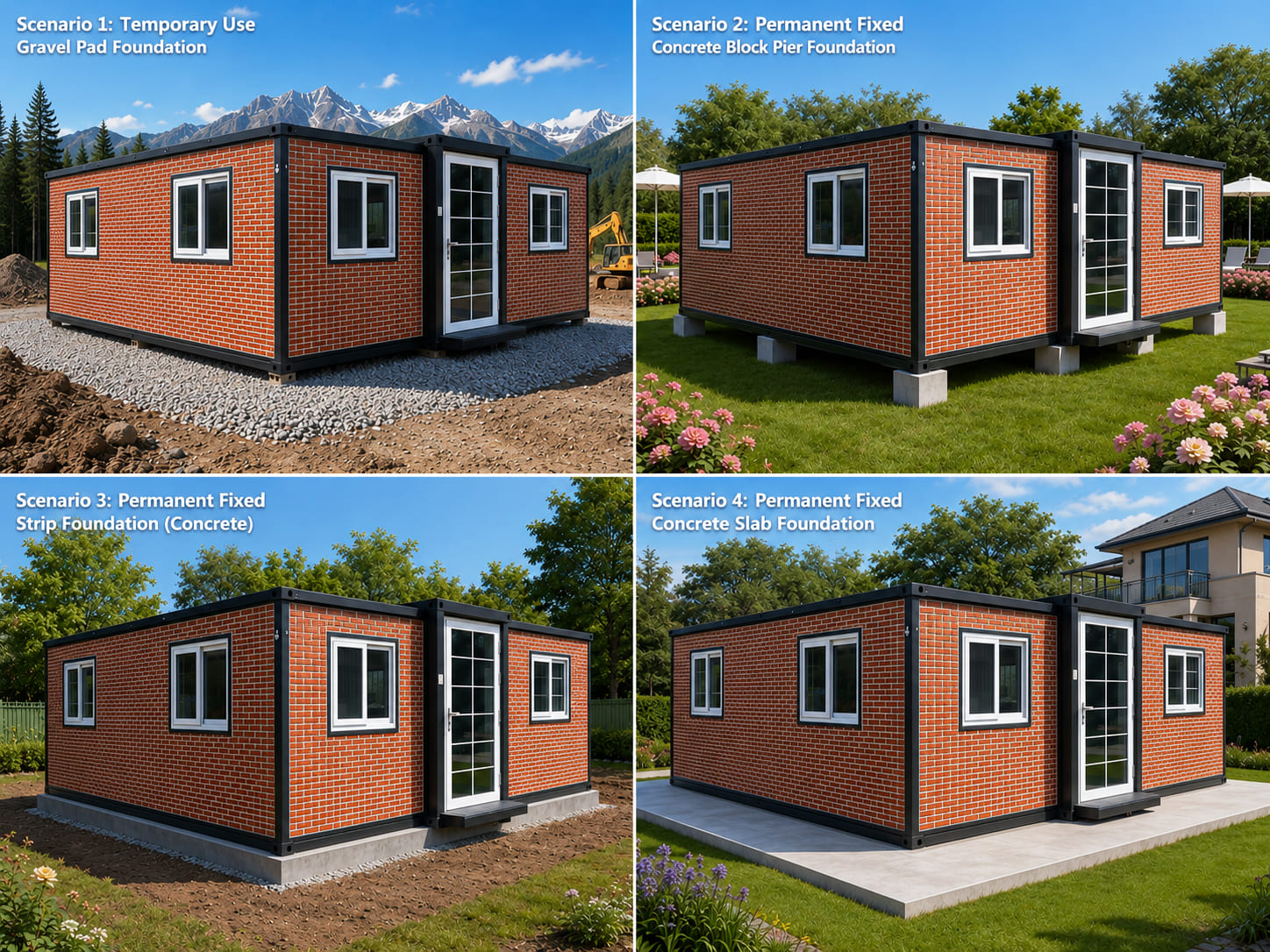
1. Four Common Foundation Types (USD)
| Foundation Type | Cost (USD) | Difficulty | Time | Stability | Relocatable | Best For |
|---|---|---|---|---|---|---|
| Gravel Pad | 300–800 | Low | Half day | Medium | High | Temporary camps, backyard ADU, tight budget |
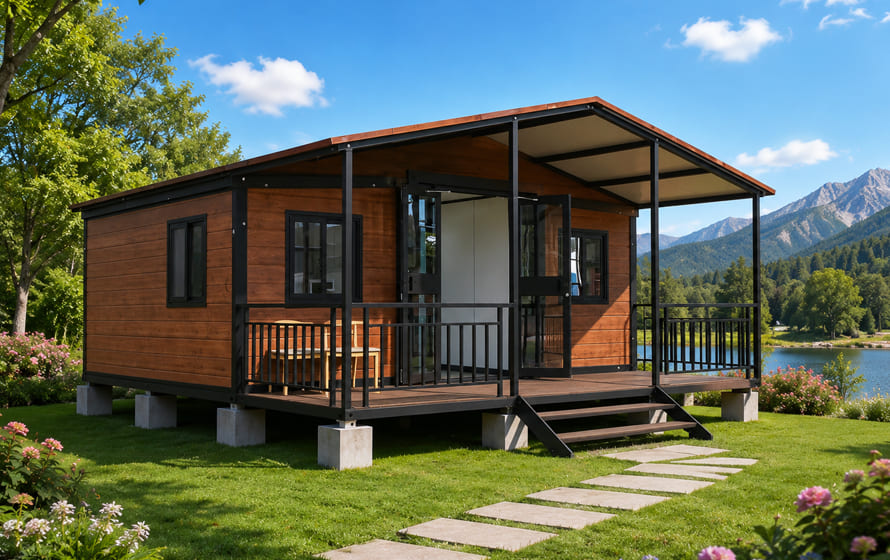
| Concrete Blocks/Piers | 500–1,500 | Medium | 1-2 days | High | Medium | Uneven ground, permanent homes |
| Strip/Trench Footing | 1,500–3,000 | Medium | 2-3 days | Very high | Low | Long-term fixed use, larger units |
| Concrete Slab | 2,000–5,000+ | High | 3-5 days | Highest | Low | Permanent homes, commercial |
2. Site Preparation Steps
| Step | Action | Tools | Notes |
|---|---|---|---|
| 1. Clear the site | Remove all vegetation, rocks, debris | Shovel, rake | Clear to at least 4-6 inches deep |
| 2. Rough leveling | Use excavator to level the area | Small excavator | Can rent for 200−400 USD/day |
| 3. Compact | Compact with plate compactor | Plate compactor | Rent for 50−100 USD/day |
| 4. Lay gravel | Lay 4-6 inches of crushed stone | 3/4“ crushed stone (10-15 tons), rake | Gravel costs 30−50 USD/ton |
| 5. Fine leveling | Ensure 2% drainage slope | Level, slope gauge | Slope away from the container |
Important reminder: Once the gravel base is complete, be sure to check the level with a spirit level. An uneven foundation will amplify all subsequent issues.
3. Gravel Pad
Best for: Temporary camps, backyard ADU, tight budget
The gravel pad is the simplest, most economical, and most popular option.
| Item | Details |
|---|---|
| Cost (USD) | 300–800 (20ft/40ft) |
| Material | 3/4″ crushed stone (10-15 tons) |
| Steps | Level ground → Weed barrier → Spread gravel → Compact → Place container |
| Pros | Cheap, fast, good drainage, relocatable |
| Cons | May settle over time, not for extreme climates |
4. Concrete Blocks / Piers
Best for: Uneven ground, permanent homes, need leveling
| Item | Details |
|---|---|
| Cost (USD) | 500–1,500 |
| Material | Precast concrete pads, concrete blocks, mortar |
| Steps | Mark positions → Dig holes → Place/pour piers → Level → Place container |
| Pros | Affordable, adjustable, good ventilation, moisture-proof |
| Cons | Requires some skill |
5. Concrete Slab
Best for: Permanent homes, commercial buildings, high standards
| Item | Details |
|---|---|
| Cost (USD) | 2,000–5,000+ (20ft/40ft) |
| Material | Concrete, rebar, forms |
| Steps | Excavate → Formwork → Rebar → Pour concrete → Finish/cure → Place container |
| Pros | Most stable, most durable, flat floor, good insulation |
| Cons | Expensive, not relocatable, longest construction time |
6. Common Mistakes and Their Consequences
| Mistake | Consequence | Correct Practice |
|---|---|---|
| Placing directly on grass | Twisted frame, misaligned doors, rust | At least use a gravel pad |
| Not compacting the ground | Uneven settling, doors won‘t close | Compact thoroughly with plate compactor |
| No drainage slope | Water pooling, rust at the base | Ensure 2% slope away from container |
| Loose bolts | Shaking, noise, reduced safety | Double-check all connections after assembly |
7. Foundation Maintenance
| Maintenance Item | Frequency | Action |
|---|---|---|
| Check gravel pad | Once per year | Add gravel if needed, maintain level |
| Check drainage | Every 3 months | Clear debris from drainage paths |
| Check for rust at base | Once per year | Remove rust and repaint as needed |
8. Quick Decision Guide
| Your Need | Recommended Foundation |
|---|---|
| Tight budget, temporary (<2 years) | Gravel Pad |
| Backyard ADU, medium budget | Gravel Pad or Concrete Blocks |
| Permanent home, high standards | Concrete Slab |
| Uneven ground | Concrete Blocks/Piers |
| Cold climate (frost protection) | Concrete Slab (with insulation) |
| Needs frequent relocation | Gravel Pad (reusable) |
9. FAQ
Q: Can I put a container house directly on grass?
A: Not recommended. Grass is uneven and will cause the container to twist, leading to door misalignment. Prolonged ground contact accelerates rust.
Q: Do I need a building permit?
A: Permanent foundations usually require permits. Temporary gravel pads are often considered “temporary structures” and may not. Check with your local planning department.
Q: Does the foundation need drainage?
A: Yes. Regardless of the type, ensure the surrounding area has good drainage to prevent water pooling.
Q: How much more does a 40ft foundation cost compared to 20ft? (USD)
A: Material cost is roughly proportional to floor area. A 40ft foundation typically costs 1.5-2x more than a 20ft foundation.
10. Bottom Line
Tight budget, temporary use → Gravel Pad
Uneven ground, needs leveling → Concrete Blocks/Piers
Permanent home, high standards → Concrete Slab
👉 Not sure which foundation is right for your site? Contact us with your ground conditions and intended use. We‘ll provide expert advice.
👉If you’re considering a Backyard ADU, click here to learn more.