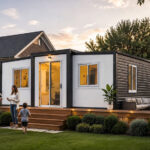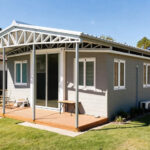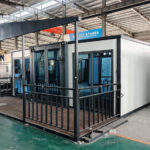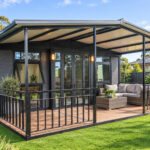
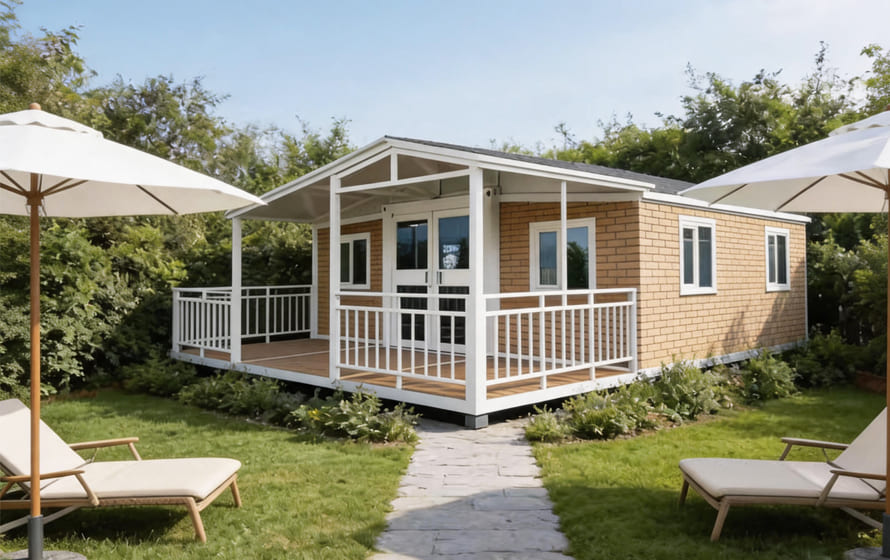
An Accessory Dwelling Unit (ADU) — also known as a granny flat, in-law suite, or backyard cottage — is one of the smartest investments a homeowner can make.
And an expandable container ADU has become one of the most practical solutions for homeowners who want to add a backyard living space, rental unit, guest house, or home office without the long construction timeline and high cost of traditional ADU construction.
This comprehensive guide covers: why add an ADU, why use a container, complete cost breakdown, rental income potential, permit requirements by state, step-by-step process, and real-world ROI examples.
⚡ Quick Answer
Most backyard expandable container ADU projects cost between $30,000 and $60,000 fully installed, depending on size, location, utilities, and customization.
Typical project timeline:
30-90 days from order confirmation to move-in readiness.
Most homeowners recover their investment within:
2-4 years through long-term rental income or Airbnb operations.
The most popular configuration is a fully expanded 40ft expandable container house providing approximately 72㎡ (775 sq ft) of living space with one or two bedrooms.

📑 Table of Contents
What Is a Backyard ADU?
Why Choose an Expandable Container ADU?
20ft vs 40ft Expandable ADU Comparison
Expandable Container ADU Cost Breakdown
Expandable Container ADU Rental Income Potential
ADU Permit Requirements by State
Best Foundation Options for Container ADUs
How to Install an Expandable Container ADU
Real ROI Example
ADU Financing Options
Frequently Asked Questions
Final Thoughts
Why Add an ADU to Your Backyard?
ADUs have exploded in popularity over the past 5 years, and for good reason.
| Reason | Benefit |
|---|---|
| Extra monthly income | Rent for 1,200–2,500/month depending on location |
| Aging parents | Independent living space close to family (“one soup away”) |
| Adult children | Affordable housing for young adults just starting out |
| Home office | Quiet, dedicated workspace away from main house distractions |
| Property value | Homes with ADUs sell for 20-30% more than comparable homes without |
| Guest accommodation | Never worry about where visitors will sleep again |
| Future rental | Can be rented long-term or as an Airbnb |
According to a 2025 study by the California Department of Housing, homes with ADUs sold for an average of 25% more than comparable homes without ADUs.
Key takeaway: An ADU is not an expense — it‘s an income-producing asset attached to your property.
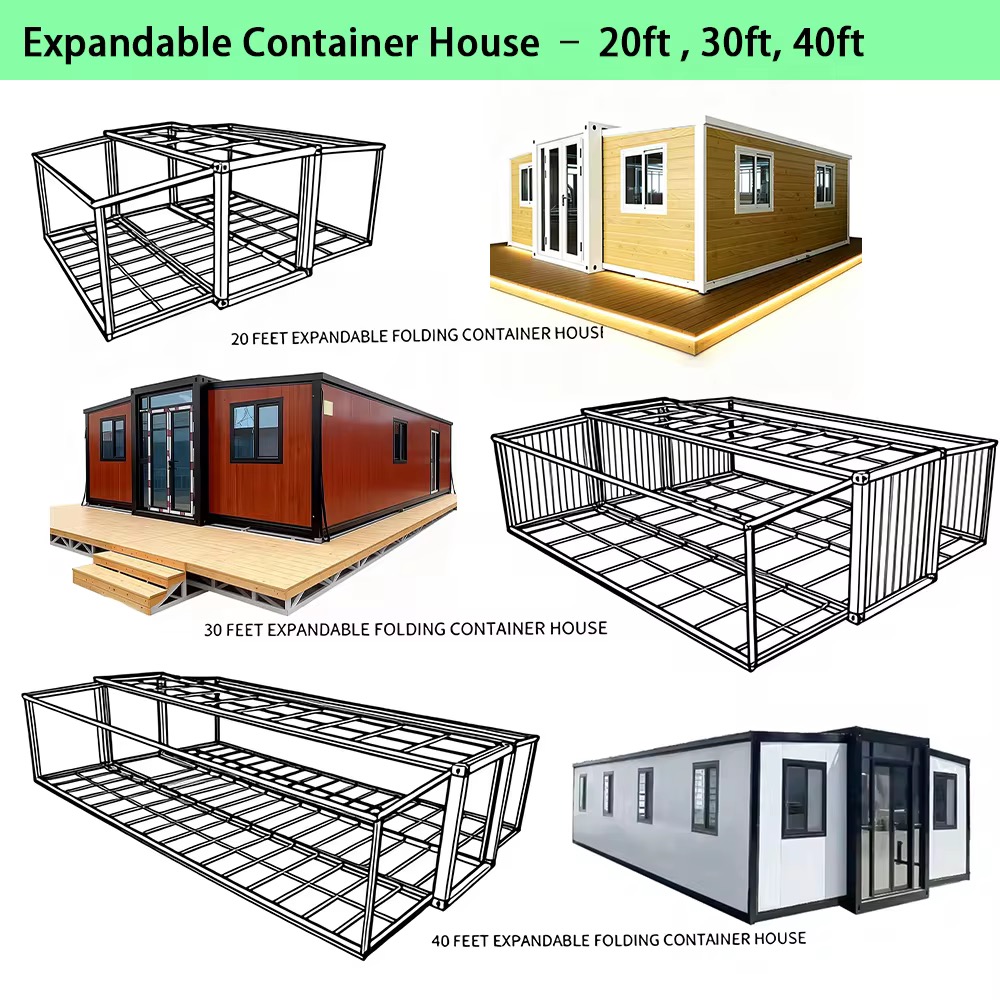
20ft vs 40ft Expandable ADU Comparison
| Feature | 20ft Expandable ADU | 40ft Expandable ADU |
|---|---|---|
| Expanded Floor Area | ~37㎡ | ~72㎡ |
| Bedrooms | Studio/1-2 Bedrooms | 2-4 Bedrooms |
| Typical Use | Guest Room, Office | Backyard rental / Family unit |
| Typical Landed Cost | $20,000-$35,000 | $30,000-$60,000 |
| Installation Time | 1 Day | 1-2 Days |
| Rental Potential | Moderate | Excellent |
Actual expanded floor area depends on the manufacturer’s design. Most 20ft expandable container ADUs provide approximately 35-40㎡ after expansion, while 40ft models usually provide around 70-75㎡.
For most backyard rental projects, the 40ft model provides the best balance between cost and rental income potential.
Learn more:
🔗 Explore our 20ft expandable container house for compact Airbnb
🔗 Explore our 40ft expandable container house for larger Airbnb.
Why Choose an Expandable Container ADU Over a Traditional ADU?
Traditional ADUs are built like small houses — wood frame, foundation, months of construction. An expandable container ADU is completely different.
| Comparison | Traditional Wood ADU | Expandable Container ADU |
|---|---|---|
| Construction time | 6-12 months | 1-3 days installation after delivery (factory production and shipping not included) |
| Cost per square foot | 250–400 | 60–120 |
| Foundation required | Usually yes (concrete, 8k−20k) | Depends on local code. Many projects use concrete pads, piers, or engineered foundations. |
| Permit complexity | High (full building permit) | Low (simple ADU registration) |
| Neighbor disruption | High (noise, dust, workers for months) | Minimal (half-day crane, one delivery truck) |
| Relocatable | No — permanent structure | Yes — can be disassembled and moved |
| Financing | Construction loan or HELOC | Cash, personal loan, or HELOC |
| Construction waste | Significant | Minimal |
The biggest advantage: speed. You can go from order to move-in in under 3 months. A traditional ADU takes at least 6-12 months.
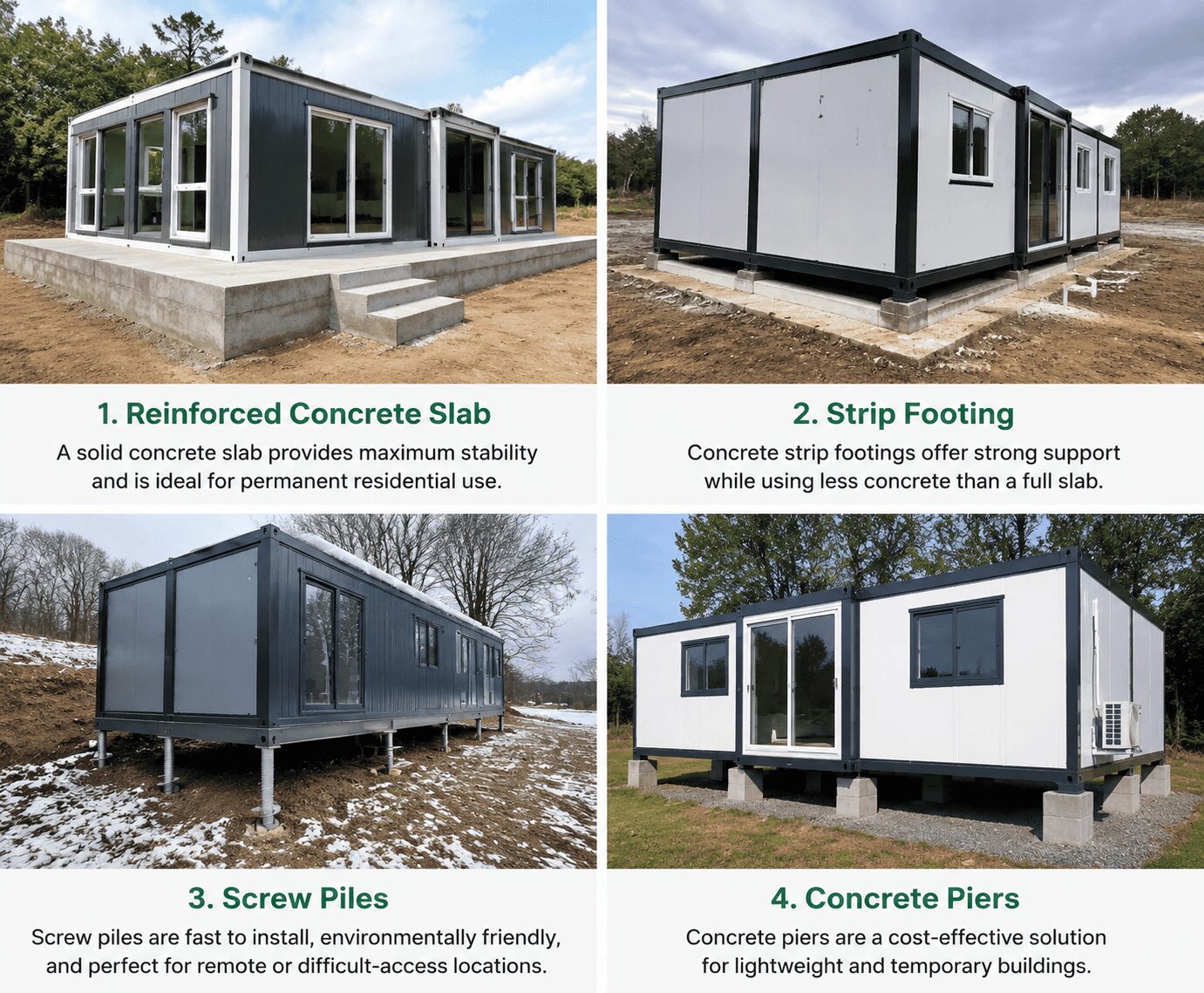
Another advantage is the flexible foundation options. Depending on local building codes and soil conditions, expandable container ADUs can be installed on concrete slabs, piers, strip foundations, or engineered gravel bases.
Complete Landed Cost Breakdown (40ft ADU)
Let‘s get specific. Here‘s the complete cost to get a 40ft expandable container ADU delivered and installed on your property.
| Cost Item | Amount (USD) | Notes |
|---|---|---|
| 40ft expandable container (FOB) | 10,000-13,000 | Includes bathroom option, electrical, insulation, flooring, interior wall panels |
| Ocean freight (China → US West Coast) | 3,000–5,000 | 40ft container, seasonal variance |
| Customs clearance & duties | 300–500 | Prefab buildings: 0% duty typically |
| US inland trucking | 500–1,000 | Port to your property |
| Site prep (gravel pad) | 500–800 | No concrete needed |
| Utility hookup (from main house) | 2,000–8,000 | Electric + water + sewer/septic |
| Permit fees | 500–1,500 | Varies by city |
| Interior furniture & appliances | 2,000–5,000 | Optional — fridge, bed, sofa, etc. |
| Insurance & contingency | 500–1,000 | Recommended |
| Total Landed Cost | 30,000–60,000 | Average project cost: approximately $40,000-$45,000 depending on location and upgrades. |
A 20ft expandable container ADU typically costs approximately $20,000-$35,000 installed, making it suitable for guest rooms, home offices, studios, or small rental units.
Key takeaway: For around 30,000, you can have a fully functional, rent−ready ADU in your backyard. A traditional ADU of similar size often costs $100,000-$250,000 depending on location, labor costs, and permitting requirements.
Expandable Container ADU Rental Income Potential in the US
How much can you actually make? Here are 2026 average rents for 1-bedroom ADUs in major US cities.
| City | Average Monthly Rent (1-Bed ADU) | Annual Gross Income |
|---|---|---|
| Los Angeles, CA | 1,800–2,500 | 21,600–30,000 |
| San Diego, CA | 1,600–2,200 | 19,200–26,400 |
| San Francisco, CA | 2,000–3,000 | 24,000–36,000 |
| Portland, OR | 1,300–1,800 | 15,600–21,600 |
| Seattle, WA | 1,600–2,300 | 19,200–27,600 |
| Denver, CO | 1,400–2,000 | 16,800–24,000 |
| Austin, TX | 1,300–1,900 | 15,600–22,800 |
| Nashville, TN | 1,200–1,700 | 14,400–20,400 |
| Atlanta, GA | 1,100–1,600 | 13,200–19,200 |
Source: Based on average rental market data from major US metropolitan areas.
Payback period calculation:
Average investment: $30,000
Average monthly rent: $1,500
Monthly expenses (property management, vacancy, maintenance): ~$300
Net monthly income: ~$1,200
Payback period: 30,000÷1,200 ≈ 25 months (just over 2 years)
After 2 years, the ADU generates pure profit — 1,200+/month, 14,400+/year.

ADU Regulations by State (2026)
ADU laws vary significantly by state. Here‘s what you need to know.
California (Most ADU-Friendly)
| Rule | Requirement |
|---|---|
| Owner occupancy | Not required (can rent immediately) |
| Lot size minimum | None (statewide) |
| Setbacks | 4 feet from rear/side property lines |
| Permit process | Ministerial approval within 60 days |
| Parking | Not required within 0.5 mile of public transit |
California has been the national leader in ADU legalization since 2020. If you live in CA, California remains one of the most ADU-friendly states in the US to add a container ADU.
Washington
| Rule | Requirement |
|---|---|
| Owner occupancy | Not required in most cities |
| Lot size minimum | Varies by city |
| Setbacks | Standard local rules |
Seattle and Portland metro areas are very ADU-friendly. Rural areas vary.
Texas
| Rule | Requirement |
|---|---|
| Owner occupancy | Not required |
| Lot size minimum | Varies by city |
| Setbacks | Standard local rules |
Austin is the most ADU-friendly city in Texas. Houston and Dallas have fewer restrictions than you might think.
Key takeaway: If you live in CA, OR, WA, or a major metro area, you can likely add a container ADU with minimal red tape.
Best Foundations for Backyard ADUs
Most expandable container ADUs can be installed on:
- reinforced concrete slab
- pier foundation
- strip footing foundation
- compacted gravel pad
For permanent residential use, reinforced concrete slabs remain the most common solution in North America and Australia.
Typical foundation costs range between: $2,000 and $8,000, depending on local soil conditions and utility requirements.
🔗
For a detailed comparison of ADU foundation options, see our complete guide: Expandable Container House Foundation Guide.
Step-by-Step Process to Build Your Container ADU
Here‘s exactly what you need to do, from idea to move-in.
| Step | Action | Timeline |
|---|---|---|
| 1 | Check local ADU regulations (call your planning department) | 1 day |
| 2 | Measure your backyard for space (need ~12m × 6m for 40ft unit) | 1 day |
| 3 | Order your expandable container with your size and upgrades | 1 day |
| 4 | Factory production (your unit is built to order) | 4-5 weeks |
| 5 | Ocean freight from China to US port | 4-5 weeks |
| 6 | Customs clearance + inland trucking to your property | 1-2 weeks |
| 7 | Prepare site (clear area, lay gravel pad) | 1-2 days |
| 8 | Delivery & installation | 1-3 days depending on site conditions |
| 9 | Utility hookup (electrician & plumber) | 1-2 days |
| 10 | Final inspection (if required by your city) | 1 day |
| 11 | Move in or list for rent | — |
Total time from order to move-in: Approximately 10-14 weeks.
Compare that to 6-12 months for a traditional ADU. You save 3-6 months of waiting.

Example ROI Calculation: California Backyard ADU Project
| Item | Details |
|---|---|
| Property type | Single-family home with large backyard |
| ADU size | 40ft expandable container with bathroom + kitchenette |
| Total landed cost | $34,000 |
| Rental income | $2,200/month (long-term tenant) |
| Annual expenses | $3,000 (property tax increase, insurance, maintenance) |
| Annual net income | $23,400 |
| Payback period | 17 months |
Based on this scenario, the homeowner could recover the initial investment in approximately 17 months before considering major financing costs.

Financing Your ADU
You don‘t necessarily need $30,000 in cash. Here are common financing options:
| Option | Best for | Typical Rate |
|---|---|---|
| Cash | No interest, fastest process | 0% |
| HELOC (Home Equity Line of Credit) | Homeowners with equity | 7-10% |
| Personal loan | Good credit, no home equity | 8-15% |
| Credit card (0% intro APR) | Small portion of cost | 0% for 12-18 months |
| Cash-out refinance | Low existing mortgage rate | Current mortgage rates |
Key takeaway: Even if you don‘t have $30,000 cash, the monthly rental income can easily cover loan payments.

🔗 Related Articles
- Expandable Container House Cost Guide
- Expandable Container House Floor Plans
- Expandable Container House Foundation Guide
- Expandable Container ADU ROI
- Backyard Container House Airbnb Case Study
- 40ft expandable container house
Frequently Asked Questions
Q1:Is an expandable container ADU legal?
Yes, expandable container ADUs can be legal when they meet local building codes, zoning requirements, and permit regulations. Requirements vary by city and state, so homeowners should confirm approval before installation.
Q2: Can I put an expandable container ADU in my backyard?
Yes. Many homeowners install expandable container ADUs in backyards as guest houses, rental units, home offices, or family living spaces. The main requirements are available space, utility access, and local approval.
Q3: Does an ADU need a separate utility meter?
A: Not usually. Most ADUs share utilities with the main house. You can install a submeter if you want to bill tenants separately.
Q4: Can I rent my ADU on Airbnb?
A: Yes, in most cities. Check local short-term rental regulations. Some cities restrict Airbnb in ADUs, while others encourage it.
Q5: Will an ADU increase my property taxes?
A: Yes, but the increase is typically much less than the added property value. In California, Prop 13 limits the tax increase.
Q6: What size ADU can I build?
A: Most cities allow up to 800-1,200 sq ft. Our 40ft unit (~775 sq ft) fits easily within those limits.
Q7: How close can the ADU be to my property line?
A: Typical setback requirements are 4-10 feet from rear and side property lines. Check your local rules.
Q8: Can I build an ADU if I have an HOA?
A: It depends on your HOA‘s covenants. Some HOAs prohibit ADUs; others have updated their rules to comply with state laws.
Q9: How much does a 40ft expandable container ADU cost?
A 40ft expandable container ADU typically costs between $30,000 and $60,000 fully installed. The final price depends on shipping distance, foundation type, utility connections, permits, and interior upgrades.
Q10: Is an expandable container ADU cheaper than a traditional ADU?
Yes, in many cases. Traditional ADUs often cost $100,000-$250,000 depending on location and construction requirements, while expandable container ADUs can reduce costs through factory manufacturing and shorter installation times.
Q11: Do expandable container ADUs need permits?
Yes. Most residential ADU projects require approval from local authorities. Requirements usually include zoning approval, building permits, electrical inspection, and utility compliance.
Bottom Line
An expandable container ADU is the fastest, most affordable way to add living space to your property and generate rental income.
Cost: $30,000-$60,000 fully installed
Time: 10-14 weeks from order to move-in
Income: 1,200–2,500/month rental potential
Payback: Approximately 2-5 years depending on rental income, financing, and location.
Property value increase: 20-30%
👉 Ready to start your ADU project? Contact us with your city and size preference. We‘ll provide a complete landed cost quote within 24 hours.